Pharmacy Assistant
Build practical skills in prescription processing, compounding, and pharmacy operations.
Request Info
Fill in the form below and we will contact you as soon as possible.
Not a Canadian citizen or permanent resident? Use the international form
Canadian citizen or permanent resident? Use the domestic form
About the Program
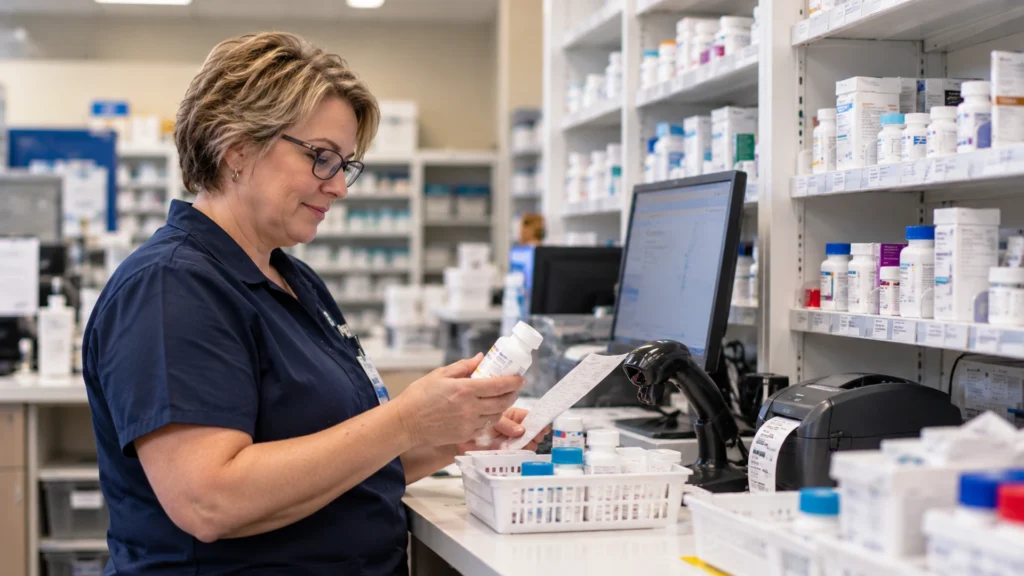
Build practical Pharmacy Assistant skills in prescription processing, pharmacy calculations, non sterile compounding, inventory, customer service, and pharmacy law and ethics. Practice through pharmacy software, simulations, and hands on activities, then apply your skills in a 6 week community pharmacy internship.
Curriculum & Program Details
Program Details
- Build practical community pharmacy skills through instructor-led learning and hands-on activities.
- Practice prescription processing, pharmacy calculations, billing, inventory, and medication safety.
- Use pharmacy software and complete non sterile compounding activities.
- Complete First Aid/CPR/WHMIS training.
- Apply your skills in a 6-week, 200-hour community pharmacy internship.
Program Fees
| Fees | Amount |
|---|---|
| Tuition | $10,053.00 |
| Digital Learning Resources | $1,012.00 |
| Student Protection Fee | $100.53 |
| Total Domestic Tuition and Fees | $11,165.53 |
| International Student Fee International students only, in addition to the total above | $2,513.00 |
Price displayed reflects current domestic tuition and includes applicable taxes and ancillary fees. Pricing is subject to change. Fees may vary for out of province and international students.
Pricing above is valid for all domestic students for programs that start before March 31, 2027.
Course Listing: New Brunswick
-
Anatomy, Physiology and Terminology 1 80 hours
In this course you will gain a comprehensive understanding of medical language, including prefixes, suffixes, root words, and abbreviations, alongside anatomy and physiology concepts. You will develop the ability to analyze, spell, define, pronounce, and apply medical words that relate to specific body systems and their pathology. In addition, you will acquire the skills to accurately communicate medical information and understand the structure and function of the human body.
-
Pharmacy Compounding 60 hours
"This course provides you with the fundamental knowledge and hands-on skills required for pharmacy compounding. You will learn about various medication dosage forms, as well as the principles, techniques, proper use of equipment and tools, and regulations involved in preparing customized medications. The course covers key compounding procedures used for non-sterile preparations, weighing and measuring ingredients, mixing techniques, and proper labelling and documentation. Emphasis is placed on quality control, accuracy, and adherence to compounding standards to ensure patient safety. Through a combination of theoretical instruction and practical lab work, you will gain confidence in preparing compounded medications while following industry best practices and regulatory guidelines. This course involves the application of both pharmacy math and pharmaceutical abbreviations in the compounding and dispensing of medications."
-
Career Planning and Preparation – Level 2 20 hours
This course builds on concepts and skills introduced in the Career Planning and Preparation Level 1 course. In this subsequent course, you will update and refine your résumé and LinkedIn Profile. You will continue writing cover letters and learn the value of customizing cover letters to specific job postings. You will have the opportunity to apply this knowledge as you conduct a job search and write a cover letter tailored to an ideal job post. Through research, you will create a list of top employers and target current industry opportunities. You will learn about current methods for applying to job postings using technology. You will also gain an understanding of the job interview process, typical interview questions and possible responses, and expectations of both the interviewer and interviewee. In addition, you will engage in practical application of the interview process through role-play. Topics such as negotiating salary, self-management, and on-the-job success for placements and post-graduate employment will also be covered.
-
Digital Literacy for Professionals 40 hours
This course introduces essential concepts and principles for navigating and working in a digital environment. Key topics include using devices, managing information, creating and editing content, communicating and collaborating with digital tools, and ensuring online safety and responsibility. You will also apply best practices for folder organization and file naming conventions.
-
Pharmacy Mathematics 60 hours
This course begins with a review of fundamental mathematics and its application to pharmacy calculations. It covers essential math skills used in community pharmacy, including business math, prescription pricing, medication dosage calculations, compounding calculations, and prescription transcription for directions to use. To prepare you for diverse pharmacy environments, the course also explores calculations relevant to various pharmacy settings.
-
Pharmacology 80 hours
"This course provides you with a foundational understanding of pharmacology, including drug classifications, mechanisms of action, therapeutic uses, and potential side effects. You will explore the principles of pharmacokinetics, learning how drugs interact with the body and how they are absorbed, distributed, metabolized, and excreted. The course covers major drug classes, including prescription, over-the-counter (OTC), and controlled substances, with a focus on their applications in treating various medical conditions. Through lectures, scenarios, and practical exercises, you will develop the knowledge and skills needed to support pharmacists and pharmacy technicians in ensuring safe medication distribution. Students will be introduced to commonly used Canadian generic and brand name drugs."
-
Student Success Strategies 20 hours
This course stresses the importance of developing non-technical skills to enhance personal, academic, and career success. The course will address strategies that are important for all adult learners, such as managing finances, maintaining health and wellness, understanding learning styles, setting goals, and honing practical study skills (such as memory, reading, and test-taking techniques). In addition, this course emphasizes strategies needed to succeed in your program, such as navigating technology efficiently, interacting and engaging with peers and facilitators/instructors, and managing learning time and space.
-
Community Pharmacy 80 hours
This course will introduce students to the roles and responsibilities of pharmacists, pharmacy technicians, and pharmacy assistants. It will also teach students the procedures to prepare and dispense medications, which include prescription interpretation skills, billing and inventory, as well as medication safety. This course also addresses professionalism, work ethics, and communication in the workplace. Students will train with a common pharmacy computerized dispensary system. Using this system, students will enter prescription information, generate labels, fill prescriptions, and generate pharmacy reports.
-
Pharmacy Assistant Internship 200 hours
Upon successful completion of all modules of this program, you will be placed in a 6-week, 200-hour internship in a community pharmacy. You will have the opportunity to apply your new and developed skills within a real-world environment.
-
Pharmacy Law and Ethics 40 hours
This course provides you with a comprehensive understanding of the legal and ethical frameworks governing pharmacy practice. You will explore key legislation, regulations, and professional standards that impact the dispensing, distribution, and handling of medications. Topics include the Food and Drugs Act, Controlled Drugs and Substances Act, provincial pharmacy regulations, and the role of regulatory bodies in ensuring public safety. Ethical principles, professional responsibilities, and decision-making in pharmacy practice will also be examined. Through case studies and real-world scenarios, you will develop the critical thinking skills necessary to navigate legal and ethical challenges while maintaining integrity and professionalism in a pharmacy setting.
-
Standard First Aid/CPR/WHMIS 20 hours
This course provides you with comprehensive CPR training. It includes the latest first aid and CPR guidelines and meets federal and provincial regulations for Standard First Aid and CPR Level C. The course includes the following topics: preparing to respond; the EMS system; check, call, care; airway emergencies; breathing and circulation emergencies; first aid for respiratory and cardiac arrest; wound care; head and spine injuries; bone, muscle, and joint injuries; sudden medical emergencies; environmental emergencies; and poisons. The WHMIS section of this course teaches you the basic elements of WHMIS 2015 and the Global Harmonization System. This covers the safety measures and guidelines to be followed when exposed to or working with hazardous materials.
-
Career Planning and Preparation – Level 1 20 hours
This course will introduce you to and provide practice in using the tools required for a successful job search. The concepts covered in this course will help you maintain a career-focused approach throughout your studies so that you are better prepared to conduct a job search after graduating. Specifically, you will learn how to identify your soft and hard skills and how to articulate your abilities in a clear and concise Elevator Pitch that will appeal to employers and resonate with industry contacts. You will learn about the job search resources available to you including using career websites, creating LinkedIn profiles, accessing the “hidden” job market, and networking. You will examine sample résumés and cover letters and begin the process of creating your own professional résumés and cover letters that align with current conventions for content, organization, and formatting. You will also learn about the role of references, thank you letters, workplace philosophies, and strategies for success including maintaining a professional image and using proper etiquette when communicating with potential employers and industry contacts. An introduction to Occupational Health and Safety is also provided with specific focus on employees’ rights and responsibilities, workplace health and safety policy and programs, and hazard identification and control.
Admission Requirements
- Student has Grade 12 or equivalent or meets criteria for Mature Student Status.
- Mature students must be 19 years of age, pass a qualifying test, and provide a Letter of Intent OR resume that supports their skills and aptitudes to be successful in the program.
- The approved qualifying test for this program is the Wonderlic test. A passing score for this program is 14.
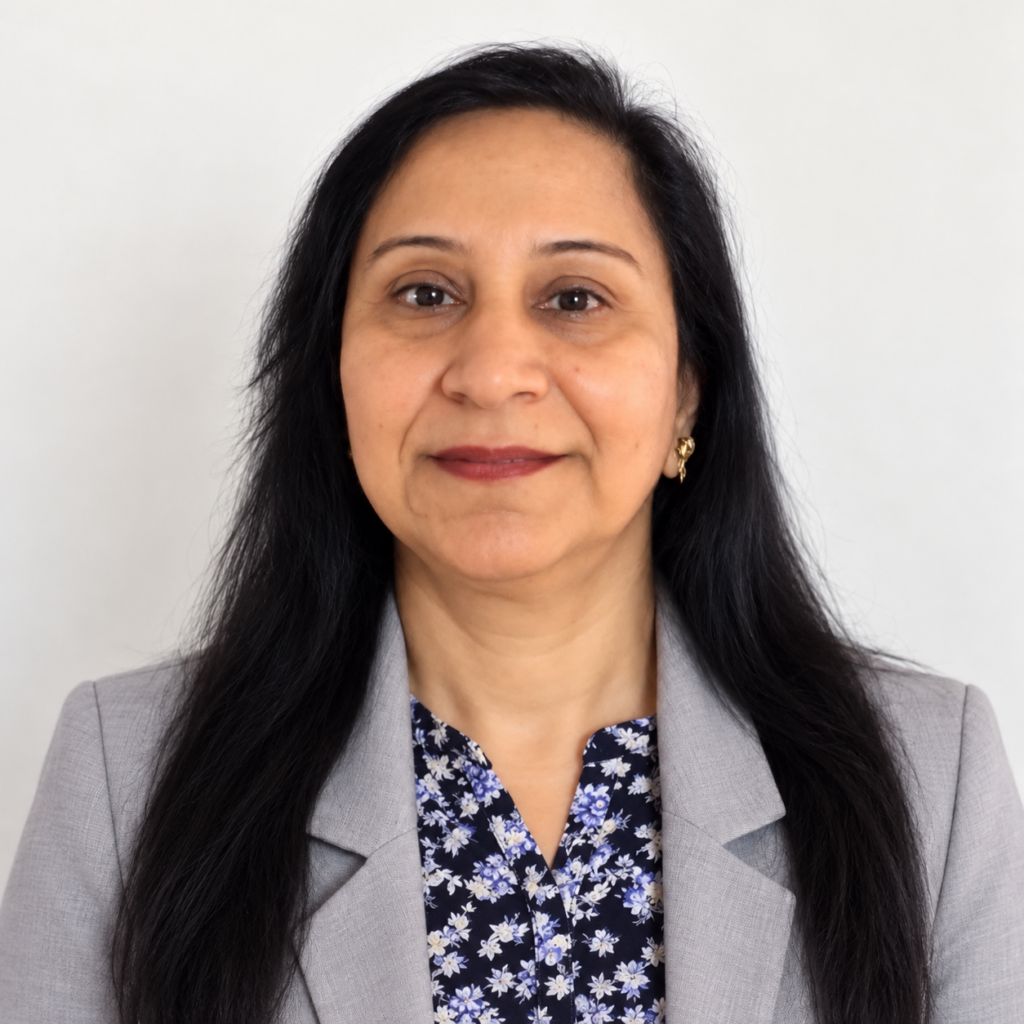
“It is rewarding to watch students build practical skills, gain confidence, and prepare for their pharmacy career.”
Faculty Head Quote
Meenakshi Sharma
Faculty Head
Hear from Graduates
What will I learn as a Pharmacy Assistant?
You will build skills in prescription processing, pharmacy calculations, medication preparation, non-sterile compounding, pharmacy law and ethics, inventory, billing, customer service, and medication safety. You will also learn how to use pharmacy software and communicate effectively with customers and healthcare professionals.
Do I need previous pharmacy or healthcare experience?
No. The program starts with the fundamentals and builds your knowledge step by step. You will learn medical and pharmaceutical terminology, pharmacy calculations, drug classifications, prescription processing, and other skills needed to prepare for an entry-level Pharmacy Assistant role.
How will I get practical pharmacy experience?
You will build practical skills through pharmacy software training, compounding activities, demonstrations, simulations, and role-play scenarios. Meenakshi’s NWD also notes that students receive a compounding kit for use during the compounding module. You will then apply your training during the community pharmacy internship.
Does the Pharmacy Assistant program include an internship?
Yes. After successfully completing the required courses, you will complete a mandatory 6-week, 200-hour internship in a community pharmacy. This gives you an opportunity to apply your skills in a pharmacy workplace under professional supervision.
Where can Pharmacy Assistants work?
Graduates may find opportunities in retail and community pharmacies, home healthcare organizations, institutional settings, insurance companies, and pharmaceutical distribution or manufacturing organizations. Pharmacy Assistants work as part of the healthcare team under the supervision of a pharmacist.